


Visual Paradigm QueryBase unlocks the structured intelligence stored inside your architectural, business process, and software engineering models. By shifting model data from isolated desktop files to an accessible, web-queryable cloud repository, QueryBase gives every team member direct access to precise system insights.
Core Capabilities of QueryBase
QueryBase turns passive modeling repositories into dynamic, searchable databases. Its core capabilities center on three distinct functional paradigms designed for accessibility, flexibility, and automation:1. Web-Based Model Exploration & Conditional Search
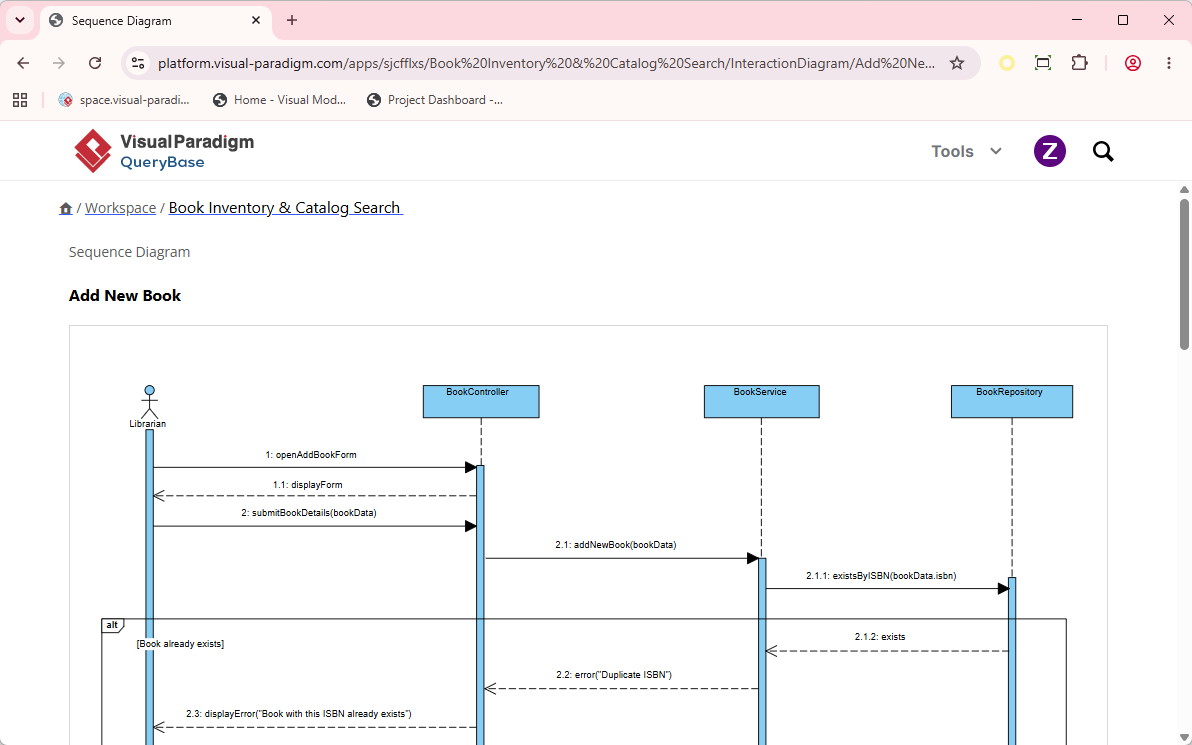
- Interactive Breadcrumb Navigation: Move effortlessly across hierarchical layers—from whole projects down to individual diagrams, shapes, and relationship parameters.
- Conditional Model Filtering: Search for model elements based on specific attributes, names, stereotypes, or types, and jump directly to the target element’s web context.
- Zero Client Footprint: Access full model details and relationship metadata without downloading or launching desktop modeling tools.
2. Hierarchical Model Extraction (Structured JSON Output)
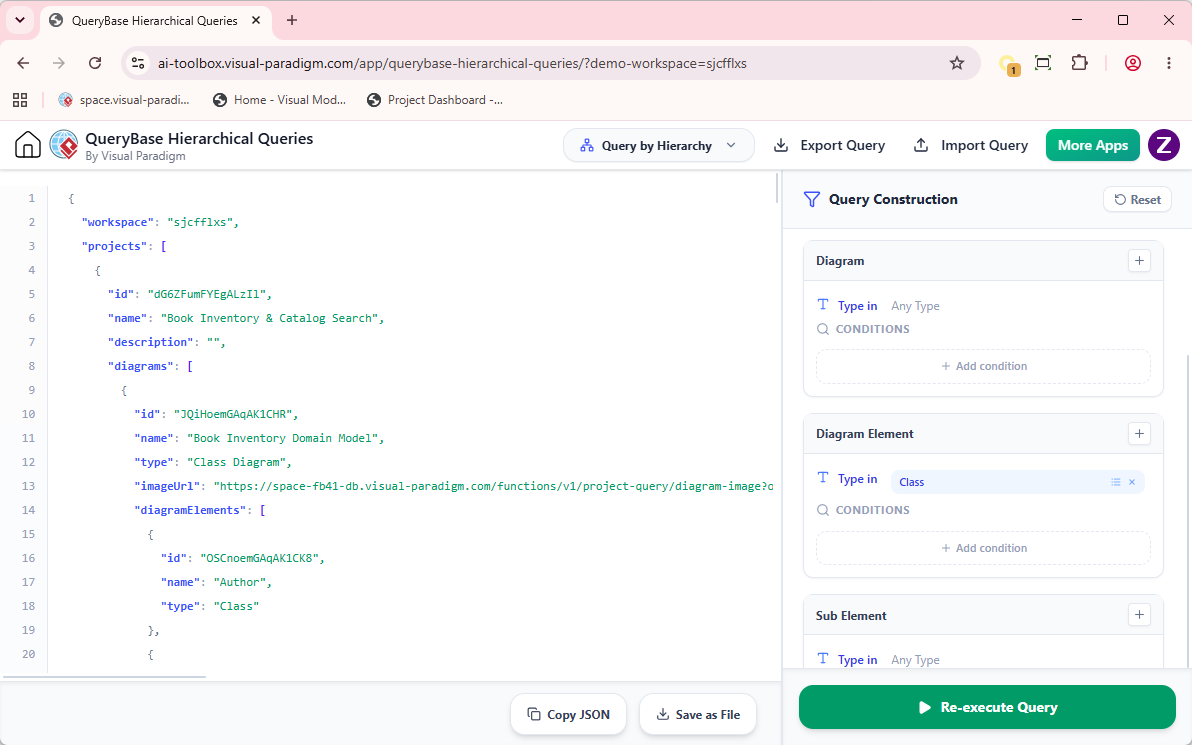
- Structured Tree Formatting: Generates well-formed JSON outputs structured as
Project > Diagram > Diagram Element > Properties. - Scope & Property Customization: Define precisely which projects, diagrams, or shapes to query, and select exact property keys to include in the payload to keep output data lightweight.
- Instant Data Portability: Export JSON files ready for consumption by custom scripts, automated reporting engines, or external databases.
3. Chained Model Queries (Graph Traversal & Data Mining)
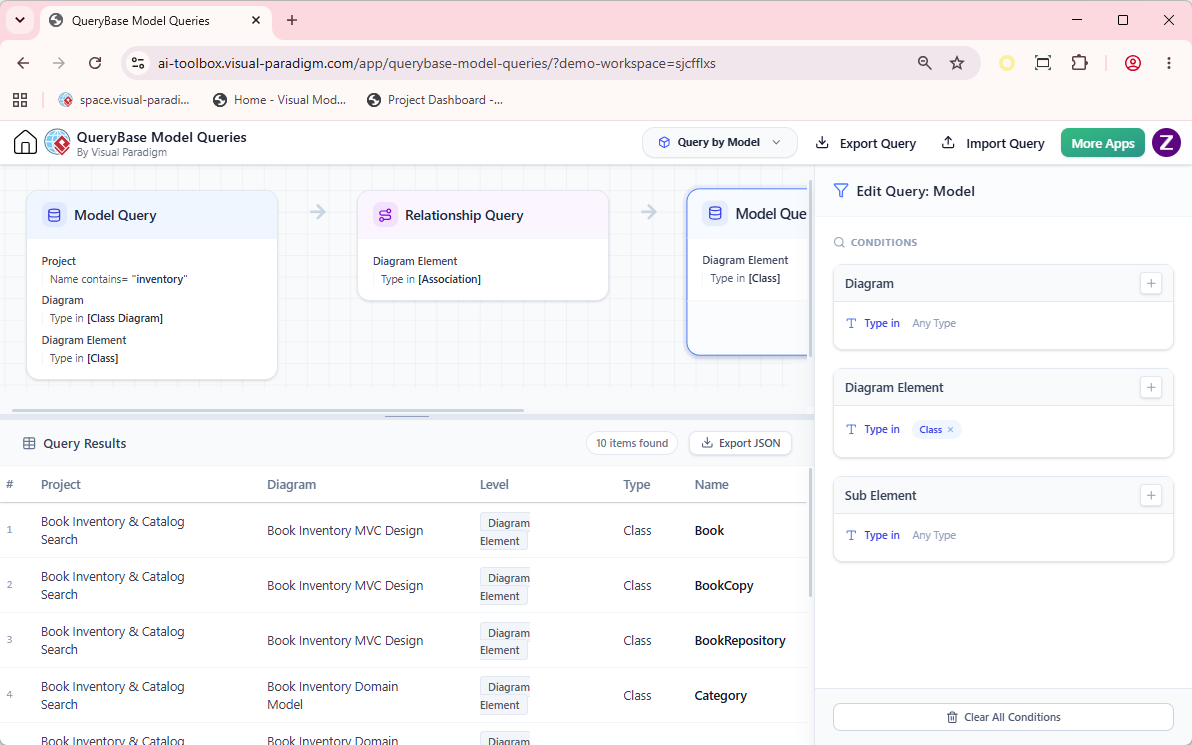
- Progressive Query Pipelines: Connect sequential query criteria together. Filter initial seed elements, traverse intermediate relationships (e.g., associations or dependencies), and capture connected target models.
- Deep Relationship Mining: Trace complex paths—such as linking a specific “Customer” Actor through its association relationships to extract every associated Use Case across your enterprise models.
- Exportable Graph Subsets: Export multi-level query results directly into structured JSON payloads for downstream architectural analysis.
Key Benefits for Teams & Organizations
Implementing QueryBase into your modeling workflow delivers measurable operational advantages across technical and business roles:🚀 Accelerated Decision-Making & Transparency
Democratize system architecture data. Product managers, quality assurance engineers, and business stakeholders can inspect project details independently without requesting manual exports or screenshots from enterprise architects.⚡ Seamless Automation & CI/CD Integration
QueryBase turns visual models into structured data sources. Developers can feed exported JSON payloads directly into custom documentation pipelines, code generation tools, compliance audit checkers, or third-party analytics dashboards.🔍 Enhanced Impact & Dependency Analysis
Before modifying a core business process or software module, use chained model queries to perform precise impact analysis. Instantly identify every system component, requirement, or user actor tied to a specific model element.💰 Reduced Licensing & Infrastructure Friction
Non-authoring stakeholders no longer require dedicated desktop modeling software licenses simply to review project specifications, significantly reducing software overhead and IT maintenance effort.Capability & Benefit Summary Matrix
| Capability | Primary Problem Solved | Key Output / Deliverable |
|---|---|---|
| Project Explorer | Difficulty accessing model details without desktop software | Interactive web view with instant breadcrumb navigation & direct element search |
| Hierarchical Queries | Manual and error-prone copy-pasting of model attributes | Structured JSON hierarchy (Project > Diagram > Element > Property) |
| Model Queries (Chained) | Inability to trace multi-step relationship dependencies easily | Exportable graph traversal dataset for deep impact analysis |